Manchester UK prayer times: prayer beginnings or mosque Jama’ah?
Prayer time listings can differ: learn how prayer beginnings and Jama’ah congregation times vary in Manchester UK, and where to verify today’s schedule for your mosque.
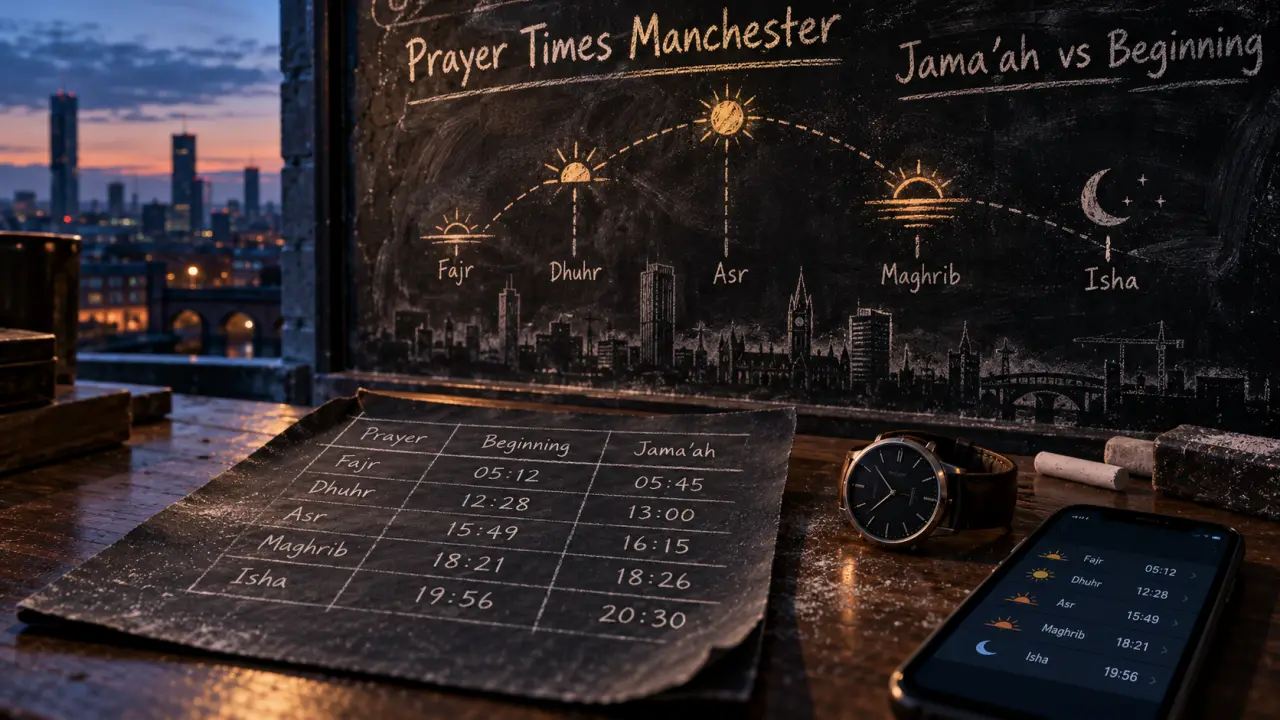
For today’s prayer times in Manchester, check the selected date on a Manchester timetable and, if you are attending a mosque, its Jama’ah schedule. A prayer’s beginning time and its congregation time are not necessarily the same. The resources below provide routes to daily timings, mosque schedules and downloadable calendars; no unverified times are presented here as today’s schedule.
Prayer times Manchester: where to check today’s schedule
For a city-level reference, Islamic Relief UK’s Manchester prayer timetable provides prayer-time information alongside an explanation of how the timings are determined. Select the date you need rather than relying on a search-result preview or an old saved image.
If you are going to pray in congregation, use the timetable published by the mosque you intend to visit. This keeps your journey planning tied to that congregation rather than to a general Manchester calculation.
- Manchester Central Mosque: its prayer-times page includes timetable selection and PDF access.
- Anwaar ul Haramain Jamé Masjid Manchester: its prayer-times page presents a monthly timetable, next-prayer information, PDF access and Jumu’ah information.
- IslamicFinder: its Manchester calendar offers daily timings, monthly and yearly views, and Hijri or Gregorian date settings.
Before using a timing, confirm that the location is Manchester, United Kingdom, the date matches your plans and the entry refers to the prayer you need. For Friday attendance, check the mosque’s Jumu’ah information specifically rather than assuming an ordinary daily entry answers that question.
Prayer time Manchester: beginning times versus Jama’ah
As Islamic Relief UK explains, calculated prayer beginning times should be distinguished from mosque congregation times. Jama’ah is the congregational prayer: its scheduled time can vary between mosques in the same city.
That distinction matters when arranging travel, a work break or a meeting. If your aim is to join a particular congregation, its published Jama’ah time is the relevant appointment. A general prayer-time listing should not be treated as confirmation of when that mosque will hold its congregation.
When comparing schedules, compare like with like. First check that both entries cover the same date and prayer. Then establish whether each figure is a beginning time or a Jama’ah time. Only after those checks is it useful to investigate a difference in calculation method.
A phone screenshot is convenient, but it can remove the very details needed to use a timetable safely. When saving one, keep the mosque name, date, column headings and any calculation notes inside the frame. A tightly cropped row of numbers loses its provenance: later, you may not know whether it shows beginnings or congregations. Save the page address alongside the image so you can recheck it before travelling.
What determines Fajr, Dhuhr, Asr, Maghrib and Isha?
Islamic Relief UK’s calculation explanation relates prayer beginnings to the position of the sun. The five daily prayers are Fajr, Dhuhr or Zuhr, Asr, Maghrib and Isha. Its explanation provides the following reference points.
| Prayer | Reference point |
|---|---|
| Fajr | The first light of dawn. |
| Dhuhr or Zuhr | Shortly after the sun passes its highest point. |
| Asr | A shadow-length calculation, with differences between jurisprudential opinions. |
| Maghrib | Sunset. |
| Isha | Nightfall. |
The same explanation identifies a doubled-shadow rule associated with Imam Abu Hanifa for Asr, while the opinions cited for Abu Yusuf, Imam Muhammad and Imam Shafi’i place it earlier. An Asr difference is therefore not, by itself, evidence of an error. Check the convention used before choosing between two displayed times.
Sunrise also appears alongside prayer entries in the Anwaar ul Haramain timetable. Keep that label distinct from Fajr when noting down your morning schedule. For questions about which convention to follow, ask your mosque rather than selecting whichever displayed time is more convenient.
Monthly calendars and PDFs for planning ahead
For recurring commitments, use a calendar covering the dates you actually need. IslamicFinder’s Manchester page provides monthly and yearly calendar options, while Manchester Central Mosque provides a route to downloadable timetables. Choose a mosque-specific schedule when planning regular congregation attendance.
Before downloading or printing, check the location, month, year and headings. If using Hijri or Gregorian settings, confirm that the selected day corresponds to your intended appointment. Keep the original file name or add a clear label identifying the mosque and covered period, rather than saving every document simply as “prayer times”.
A PDF is useful for an offline reference, but it should remain connected to its publisher. Revisit the mosque’s prayer-times page when replacing a monthly printout or making plans beyond the period shown. For daily use, the simplest routine is to check the correct date, identify the prayer beginning and then confirm the relevant Jama’ah time if attending a congregation.