Manchester United: the 1998–99 treble and the expectations it left behind
From Busby Babes to Ferguson’s dominance, the 1998–99 treble united the Premier League, FA Cup and Champions League. Discover what that historic season changed—and the expectations it left behind.
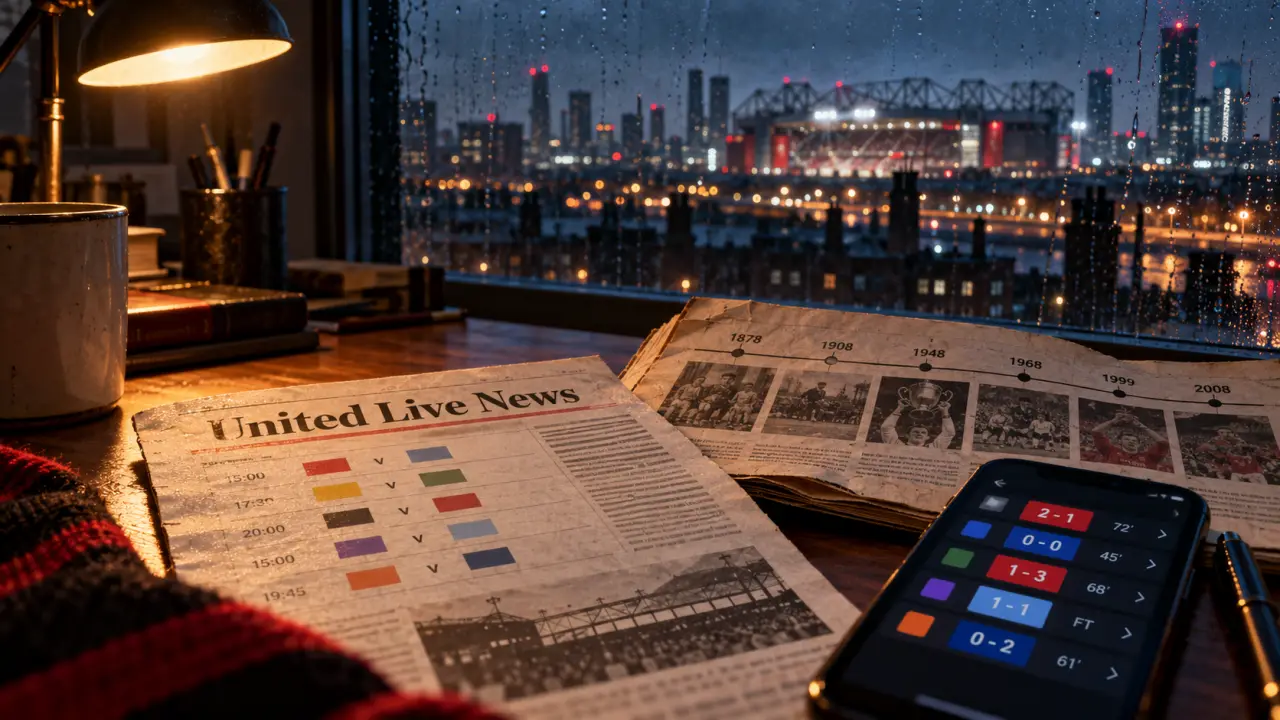
Manchester United searches often start with an immediate need: the next fixture, a result, team news or an official announcement. The club’s official website is the starting point for first-party updates. Behind those daily headlines sits a longer story, from Newton Heath to Old Trafford and the domestic and European successes that still shape expectations.
Manchester United live: finding news, fixtures and team updates
For supporters following Manchester United live, distinguish between match coverage, confirmed club information and analysis. A live text report describes events as they happen; an interview offers one participant’s account; a post-match assessment interprets the performance. They serve different purposes and should not be treated as interchangeable.
Use the official Manchester United website for club announcements and interview content, then check the relevant fixture and team information before making plans. For a matchday visit, confirm the competition, venue and kick-off details rather than relying on an old search snippet or a saved calendar entry.
Think of a live feed as a window with a narrow frame. It shows the incident in view, but not necessarily the build-up outside it. Before judging a substitution or defensive error, widen that frame: check the score at the time, the available players and the preceding passage of play. This makes minute-by-minute coverage more useful without mistaking its immediacy for a complete explanation.
This page provides historical orientation rather than a rolling score service. Current selection, coaching appointments and competition status need a dated update, not an assumption carried forward from an earlier report.
United Manchester searches: the club behind the name
Manchester United, Man Utd, Man United and United refer to the same club. Searches such as “United Manchester”, “Manchester United United” or “manchester.united” generally seek that same destination. The club is based at Old Trafford in Greater Manchester and competes in the Premier League, as outlined in its historical club profile.
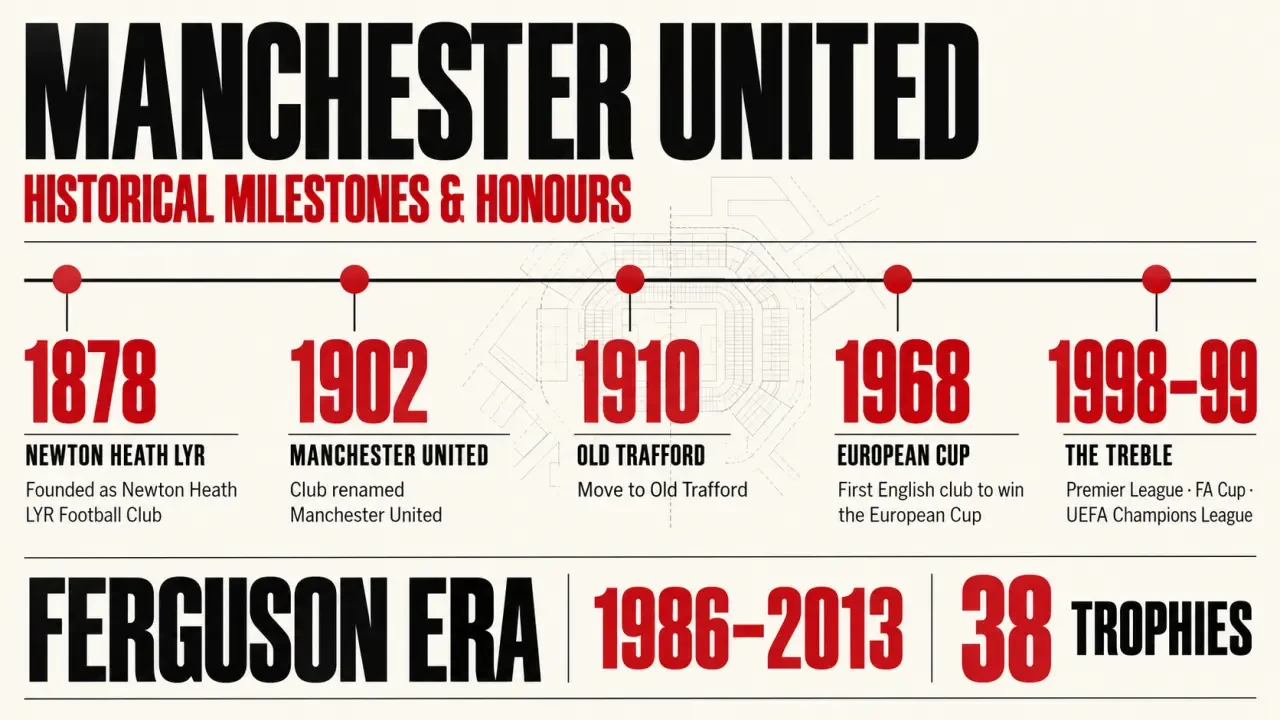
That profile traces its foundation to 1878 as Newton Heath LYR Football Club, the change to Manchester United in 1902, and the move to Old Trafford in 1910. These are separate milestones: the origins of the organisation, the adoption of its familiar name and the establishment of its stadium home.
The nickname Red Devils belongs to the club’s identity, while Old Trafford gives the story its local setting. For readers new to Manchester football, keeping club, stadium and competition distinct makes fixtures and historical accounts easier to follow.
From the Busby Babes to Ferguson’s treble
According to the club’s historical record, Matt Busby became manager in 1945. The young side associated with his leadership became known as the Busby Babes. Eight players died in the Munich air disaster, a loss central to any account of the club rather than simply a footnote to its honours.
The subsequent rebuilding culminated in 1968, when United became the first English club to win the European Cup. George Best, Denis Law and Bobby Charlton are remembered together as the United Trinity. Their place in the story connects individual talent with a wider period of recovery and achievement.
Alex Ferguson managed United from 1986–2013. The same historical record credits his tenure with 38 trophies, including 13 league titles, 5 FA Cups and 2 Champions League titles. Those figures explain why his era remains such a powerful reference point.
The 1998–99 treble brought the Premier League, FA Cup and UEFA Champions League together in one season. Its significance lies in that combination: success across the domestic league, domestic knockout football and Europe’s leading club competition, rather than three trophies of any description.
Manchester United’s top honours, with the competitions kept distinct
The published honours record includes 20 top-flight league titles, 13 FA Cups, 6 League Cups and 21 FA Community Shields. These categories should remain separate when comparing achievements: a league championship and a single-match shield represent different competitive tasks.
| International competition | Titles recorded |
|---|---|
| European Cup / UEFA Champions League | 3 |
| UEFA Europa League | 1 |
| UEFA Cup Winners’ Cup | 1 |
| UEFA Super Cup | 1 |
| Intercontinental Cup | 1 |
| FIFA Club World Cup | 1 |
Under José Mourinho, the 2016–17 Europa League victory completed United’s set of the three main UEFA club competitions, alongside the European Cup and Cup Winners’ Cup. It is a distinct milestone, not another Champions League title.
Reading present-day performances without losing perspective
Historical success provides context, but it cannot establish today’s form. A useful assessment starts with the competition, opponent, result and available team, then separates tactical decisions from execution. Pressing means applying pressure to opponents in possession; man-to-man pressing assigns that pressure around individual opponents. Neither label alone explains whether a plan worked.
Likewise, player criticism, managerial responses and transfer discussion should be read in their original setting. Check when an interview took place and whether a reported statement is a direct quotation or an interpretation. Avoid treating an isolated reaction as a settled account of the dressing room.
United’s rivalries with Liverpool, Manchester City, Leeds United and Arsenal form part of the club’s wider history. For local readers, however, the practical distinction remains straightforward: use confirmed updates for what happens next, match reporting for what happened, and historical records to understand why it matters.