Jobs in Manchester: 5 Checks Before You Apply
Trouver un job à Manchester ne suffit pas : vérifiez lieu réel, horaires garantis, type de contrat, exigences essentielles et détails de rémunération avant de postuler.
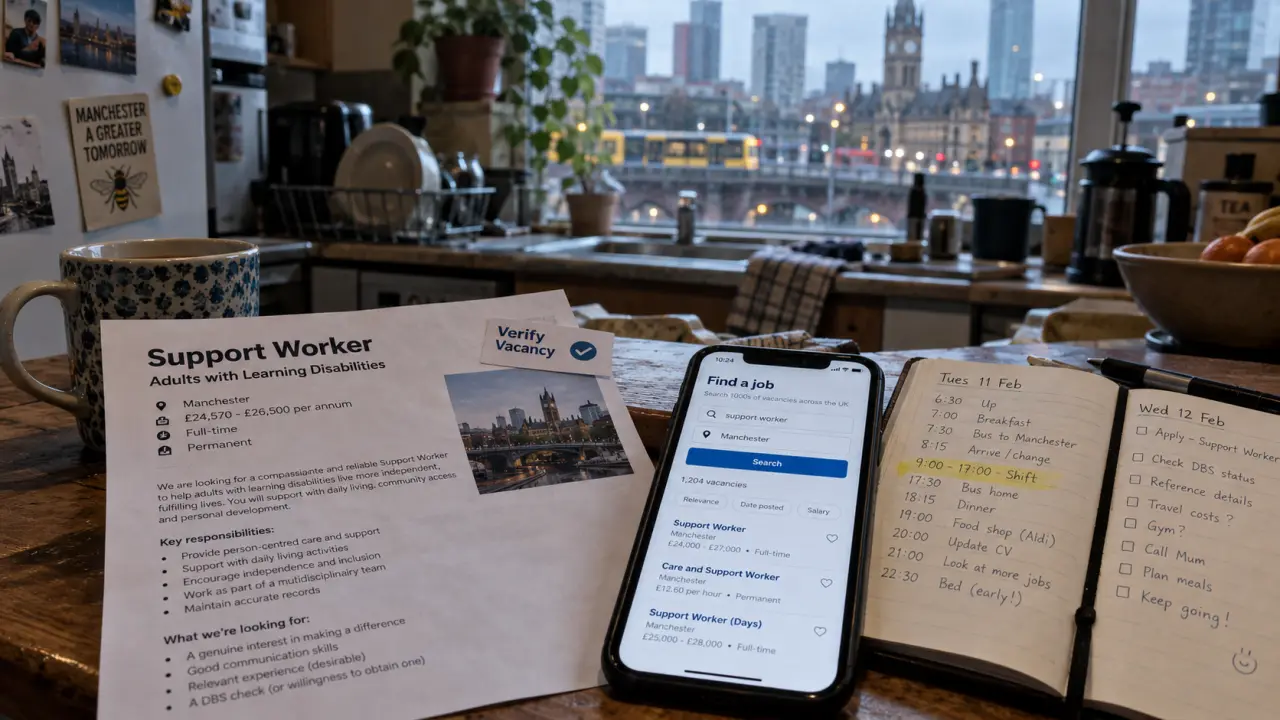
To find jobs in Manchester, start with a UK-focused vacancy search, then check the employer’s full advert before applying. Location, guaranteed hours and essential requirements matter as much as the job title. This page focuses on Manchester, UK, and helps you narrow your search without treating unverified vacancy snippets as confirmed openings.
1. Start your Manchester jobs search in the right place
The Indeed UK Manchester jobs page is a starting point for searching vacancies. Use it to identify relevant roles, then read the individual advertisement for the employer’s name, workplace, pay, contract and application instructions. Do not assume a search-result summary contains every condition.
Find Jobs and Apprenticeships Across Great Britain – Search and apply for full- and part-time jobs and apprenticeships in England, Scotland and Wales through the official government service.
Be explicit about the country. The separate Indeed Manchester, New Hampshire page concerns US employment, not jobs in this city. Check the country and workplace address before spending time on an application, particularly when arriving through a general web search.
Build searches around the work you can do rather than repeating “jobs Manchester”. Try a role title alongside Manchester, then refine by working pattern and experience level. Useful search directions include:
- Care and support: care assistant or support worker.
- Logistics: warehouse operative or logistics coordinator.
- Sales: sales adviser or customer-facing roles.
- Technical work: engineering operative or electrician apprenticeship.
- Education: teaching, classroom support or computing roles.
These are search terms, not a claim that a particular employer is recruiting today. Confirm availability in the full advert before preparing a tailored application.
2. Check the workplace, not just the Manchester label
Before widening your search, decide which workplaces you could realistically reach. Search Manchester separately from Bolton, Rochdale or Trafford if those locations suit you. Treat a result for Skelmersdale as a separate location decision, rather than assuming every result returned by a Manchester search has the same journey.
Look for the actual reporting location. Ask whether the role involves one workplace, several sites, visits to customers or an initial training location elsewhere. For remote or hybrid work, establish how often attendance is expected and whether that changes during induction.
Think of the commute as a joint between your working day and home life: the connection must hold at both ends. Check the journey against the proposed start and finish time, including any handover. A workplace that is manageable during the day may not suit an early start or late finish. Compare the whole door-to-door commitment, not simply the distance on a map.
3. Compare pay, hours and contract together
A salary figure alone is not enough to compare offers. Record whether pay is hourly or annual, which hours are guaranteed, and whether any advertised total includes overtime, commission or allowances. If the wording is unclear, ask before treating the headline figure as dependable income.
| Advert detail | What to establish |
|---|---|
| Pay | The basic rate and any conditions attached to additional earnings. |
| Hours | The guaranteed weekly commitment and expected shift pattern. |
| Contract | Whether the position is permanent, fixed-term, temporary or another arrangement. |
| Benefits | Eligibility, restrictions and whether benefits apply to this particular role. |
| Working location | On-site expectations, travel and any home-working arrangements. |
Keep working hours and contract duration separate in your notes. For part-time jobs in Manchester, ask how the hours are distributed across the week. For full-time work, check weekend commitments and shift changes rather than assuming a daytime schedule.
Compare benefits only where they are explicitly stated. Ask for clarification on annual leave, pension arrangements, training and parking if these affect your decision. Keep volunteering separate from paid employment when building your shortlist.
4. Test “no experience” against the essential requirements
When searching for jobs with no experience required, read beyond that phrase. Check the full description for qualifications, availability, practical duties and any pre-employment checks. Separate requirements you must meet before applying from skills the employer says it will teach.
For apprenticeships or trainee positions, ask what training is included, how it fits into working hours and what qualification, if any, the programme leads to. Do not assume that “training provided” means a recognised qualification or that every entry-level role follows the same progression route.
If you are changing careers, match your evidence to the duties. Customer enquiries, accurate record-keeping, organising tasks and resolving problems can provide useful application examples where relevant. Explain what you actually did and the outcome; avoid claiming specialist competence you have not gained.
Where an essential requirement is ambiguous, contact the recruiter. A short clarification can prevent an unsuitable application while keeping you from ruling yourself out unnecessarily.
5. Verify the vacancy and submit a focused application
Before applying, confirm that the advertisement is still accepting applications. Where an employer careers page is available, compare the job title, reference and location. Follow the stated application route and keep a copy of the description so you can refer to it if invited to interview.
- Record the essentials: employer, role, location, pay, hours and closing date where stated.
- Match your evidence: address the essential criteria with specific examples.
- Check instructions: supply the requested documents and answer application questions directly.
- Review before sending: check contact details, attachments and availability.
Keep a simple application log with submission dates and outstanding questions. Prioritise vacancies where the work, location and conditions fit your needs, rather than applying indiscriminately. A smaller, clearly assessed shortlist gives each application a more useful starting point.